What Does CBD Do To You?
You see it everywhere. It is in gas stations, luxury spas, coffee shops, and your grandmother’s medicine cabinet. Yet, despite its ubiquity, a fundamental question remains for the uninitiated.
If you take a dropper of oil or chew a gummy right now, what actually happens?
We are not talking about the long-term wellness goals here. We aren't discussing how a six-month regimen might support a healthy lifestyle or reduce systemic inflammation. Those are benefits, and you can read more about the therapeutic potential of Cannabidiol (CBD) in our benefits guide.
This specific guide explores the immediate experience. We are looking at the here and now. We want to know how this compound shifts your mood, alters your physical sensations, and impacts your cognitive state within minutes or hours of consumption.
The short answer is that CBD is non-intoxicating. It will not dissolve your ego or glue you to the couch like its famous cousin, THC. However, claiming it has "no effect" is also misleading. It works on the body and brain in subtle, profound ways.
Visualizing the effect: Absolute stability and clarity.
What Are the Effects of CBD?
When you introduce Cannabidiol to your system, the effects are rarely explosive. You will not feel a sudden "hit" or a rush of euphoria. Instead, the experience is often characterized by what disappears rather than what appears.
Most users describe the immediate short-term effects as a gentle de-escalation of internal noise. If your baseline is high-stress or physically tense, the shift is noticeable. If you are already completely relaxed and pain-free, you might wonder if anything is happening at all.
This variable intensity is the hallmark of CBD. It acts as a regulator rather than an activator.
The compound works by interacting with your Endocannabinoid System (ECS), a vast network of chemical signals and cellular receptors packed throughout our brains and bodies. While THC binds directly to these receptors to force a reaction, CBD takes a different approach. It lingers nearby. It encourages your body to use its own natural endocannabinoids more effectively. This results in a sensation of balance that permeates both the body and the mind.
How It Affects The Body
The physical sensation of CBD is best described as a "loosening." Many of us carry tension in specific zones without realizing it. We clench our jaws while typing. We hunch our shoulders toward our ears while driving. We hold stress in our lower backs.
When CBD takes effect, that unconscious grip tends to release. It is not a sedative weight that makes your limbs feel like lead. It is more akin to the feeling you get after a long stretch or a hot bath. You are still fully functional and capable of movement, but the resistance is gone.
Physiological responses can include a slowing of a racing heart rate if it was driven by stress. Some users report a warming sensation in joints or muscles where inflammation was flaring.
Appetite changes are generally minimal. Unlike THC, which triggers a ravenous hunger, CBD is more neutral. You might find yourself able to eat simply because your stomach is no longer knotted with anxiety, but it won’t drive you to the pantry on a mission.
How It Affects The Brain & Mood
The cognitive shift is where CBD shines for most people. The primary effect on the brain is clarity. It does not speed up your thoughts like caffeine, nor does it slow them down to a slur like alcohol. It simply organizes them.
Imagine a room filled with twenty radios playing different stations at once. That is the brain under stress or anxiety. CBD does not unplug the radios; it just turns the volume down on the background noise so you can hear the main broadcast.
You retain full control. There is no fog or confusion. In fact, many users report improved focus because the distraction of emotional turbulence has been quieted. This is due to how CBD modulates receptor activity. It influences serotonin receptors, which play a key role in mood regulation, fostering a sense of well-being without the artificial high.
We must address psychoactivity here. Technically, anything that changes your brain chemistry is psychoactive. Coffee is psychoactive. Chocolate is psychoactive. By that definition, CBD is psychoactive because it alters mood. However, it is not intoxicating. It does not impair judgment or motor skills.
Common Short-Term Side Effects
While generally well-tolerated, CBD is not without its minor drawbacks. These side effects are usually mild and temporary, fading as the compound leaves your system.
- Dry Mouth: The "cottonmouth" phenomenon happens because cannabinoids interact with receptors in the salivary glands, temporarily inhibiting saliva production. Hydration solves this quickly.
- Fatigue: This can occur, especially with higher doses. If you take a large amount of CBD during the day, you might find your eyelids getting heavy or your motivation dipping. This is why many people reserve high-potency doses for the evening.
- Lightheadedness: In rarer cases, some users experience lightheadedness or a slight drop in blood pressure, typically when standing up too quickly.
- Digestive Changes: Mild nausea or an upset stomach can occur, though this is often due to the carrier oil (like MCT oil) rather than the cannabinoid itself.
What Does It Feel Like?
Describing the feeling of CBD is an exercise in describing a negative space. You are defining the absence of things. It feels like the absence of the knot in your chest. It feels like the silence after a loud noise stops. It feels like the ground stopping its vibration.
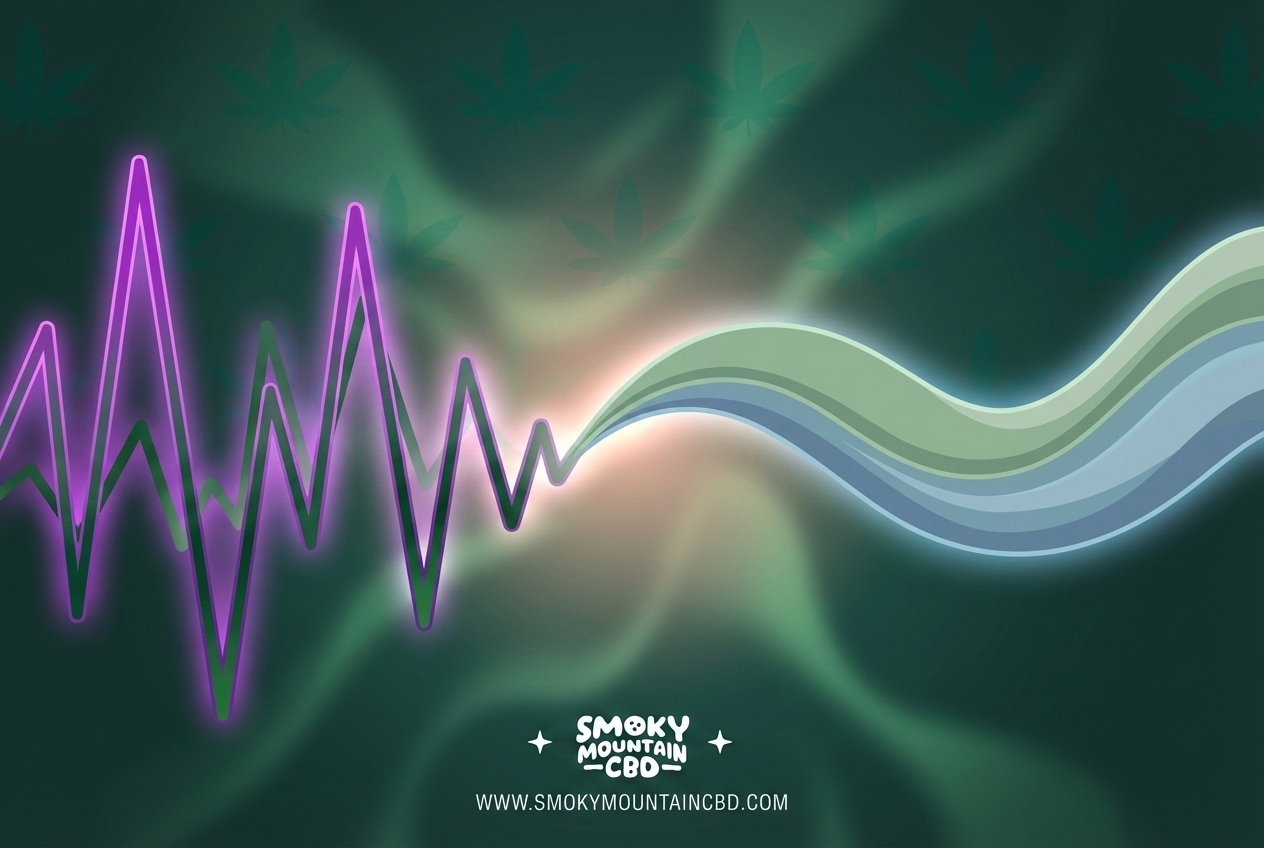
Transitioning from stress to regulation.
If you take a moderate dose, you likely won't feel "buzzed." You will simply feel like yourself on a good day. You might look at a clock and realize that for the last hour, you haven't worried about that upcoming deadline. You just worked through it.
The texture of the experience is smooth and grounded. There is no "headiness" or floating sensation. You remain firmly planted in reality, just with a thicker buffer between you and the stressors of the world.
Strength varies wildly by person. A 20mg dose might be transformative for a new user with a sensitive system, while a daily user might need 100mg to achieve the same baseline. It is highly personal. Your unique biology, metabolism, and the current state of your endocannabinoid system dictate the volume of the effect.
Does It Get You High?
No. This is the most critical distinction to make. CBD does not get you high. You can consume significant amounts of CBD, far beyond standard serving sizes, and you will not experience the intoxicating loopiness, paranoia, or time distortion associated with THC.
You will not start laughing at the wallpaper. You will not lose your train of thought in the middle of a sentence.
This distinction comes down to chemistry. THC binds perfectly to the CB1 receptors in the brain, much like a key turning a lock. This binding action triggers the cascade of signals we recognize as being "stoned." CBD has a low affinity for those same receptors. It bounces off them or changes their shape slightly so THC cannot bind as well, but it never triggers the psychoactive lock itself.
While we established that it is technically psychoactive because it affects mood, in the colloquial sense of "will this mess me up," the answer is a firm negative. You can drive a car, operate machinery, and hold a conversation with your boss while under the influence of CBD.
How Does CBD Compare to Other Cannabinoids?
Understanding CBD becomes easier when we hold it up against its siblings. Each cannabinoid has a distinct personality profile.
CBD vs. THC: This is the night and day comparison. THC is the party; CBD is the designated driver. THC offers euphoria, sensory enhancement, and sedation, but it comes with the risk of anxiety and impairment. CBD offers balance and calm with zero impairment. If you want to escape reality, you choose THC. If you want to navigate reality more comfortably, you choose CBD.
CBD vs. CBG: Cannabigerol (CBG) is often called the "mother of all cannabinoids." While CBD is calming, CBG tends to be more energizing and focus-oriented. Users often reach for CBG in the morning to sharpen their minds and CBD in the evening to unwind. Physically, both are excellent for tension, but CBG has a reputation for being particularly effective for gut health and physical discomfort.
CBD vs. CBN: Cannabinol (CBN) is the sleepy cannabinoid. While high doses of CBD can make you drowsy, that is a side effect. For CBN, sedation is the main event. CBN is heavier, groggier, and more physically sedating than CBD. If CBD is a soft blanket, CBN is a weighted quilt.
CBD vs. Delta 8: Delta 8 is a form of THC, meaning it does get you high. It is milder than standard Delta 9 THC, but it is still intoxicating. Comparing CBD to Delta 8 is like comparing a non-alcoholic beer to a light beer. One keeps you sober; the other gives you a buzz.
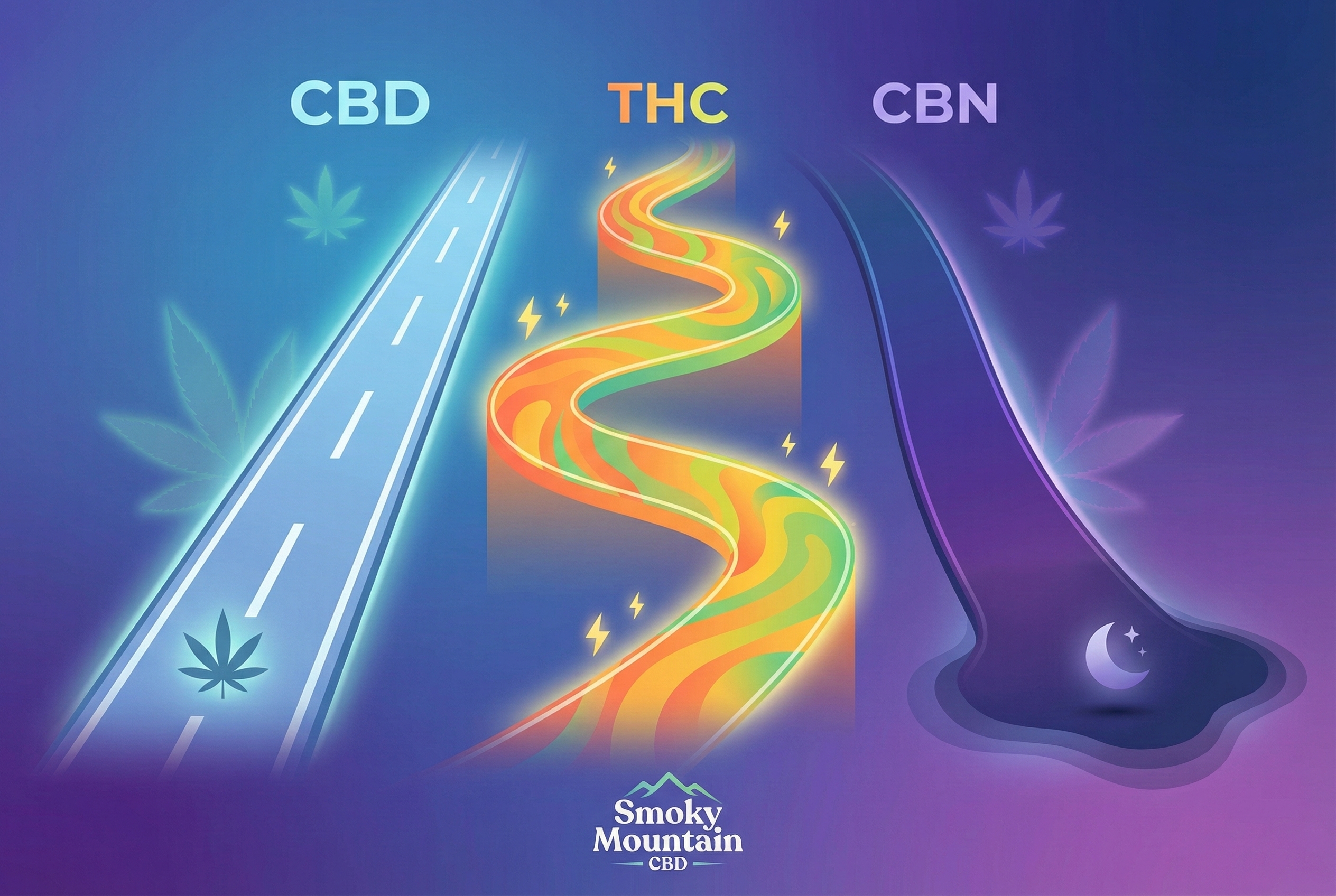
Visualizing the user journeys: Clear (CBD), Elevated (THC), and Sleepy (CBN).
Effects: Key Takeaways
If you are considering adding CBD to your routine, here is the summary of what you need to know regarding the experience itself.
- It regulates rather than intoxicates. You will feel a shift in mood and tension, but you will not feel high. It anchors you in the present moment rather than detaching you from it.
- The feeling is often subtle. It is the subtraction of stress, pain, and anxiety. Do not wait for a "boom" moment; instead, look for the relief of pressure.
- It is physically relaxing without being physically disabling. Your muscles may loosen, and your jaw may unclench, but you will remain functional unless you take a massive dose.
- It is the safest entry point into the world of cannabis. Because it lacks the intoxicating properties of THC and the heavy sedation of CBN, it is the most versatile tool in the plant's arsenal.
Pro Tips for Beginners
- Listen to your body: Every cannabinoid feels different. Psychoactive doesn't always mean intoxicating. Know the difference. Early effects are subtle. Watch for mood and tension shifts.
- Bio-individuality: Everyone feels cannabinoids differently. Body chemistry matters. Potency and terpenes shape the actual feel. Some cannabinoids feel mild by design. That's normal.
- Method matters: Inhaled products hit fast. Edibles feel heavier and last longer. Pairing cannabinoids changes the experience. Mix with purpose.
Frequently Asked Questions
How long do the effects of CBD last?
The duration depends heavily on how you consume it. Inhalation (vapes or flower) offers the shortest window, typically lasting 2 to 3 hours. Sublingual oil drops usually persist for 4 to 6 hours. Edibles, which must be processed by the liver, have the longest tail, providing effects that can last anywhere from 6 to 8 hours.
How fast do effects start?
Again, the method matters. Inhalation is nearly instant, with effects peaking within 10 to 15 minutes. Oils held under the tongue enter the bloodstream quickly, usually taking effect in 15 to 30 minutes. Edibles are the slow burn, requiring 45 minutes to 2 hours before you notice the shift.
Can you feel too much of CBD?
You cannot fatally overdose on CBD, but you can certainly take enough to feel uncomfortable. "Too much" usually manifests as extreme drowsiness, an upset stomach, or a mild headache. If you overdo it, the remedy is simple: drink water and take a nap. The feeling will pass.
Will this cannabinoid make me fail a drug test?
Pure CBD isolate will not cause you to fail a drug test. However, many products are "Full Spectrum," meaning they contain trace amounts of THC (up to 0.3%). If you consume high doses of Full Spectrum CBD daily, those trace amounts can accumulate and potentially trigger a positive result for THC. If testing is a concern, stick to Broad Spectrum or Isolate products.
Do edibles vs tinctures vs vapes feel different?
Yes. Vapes tend to feel more "cerebral" and light, hitting fast and fading fast. Edibles produce a deeper, more body-centric sensation that feels heavier and lasts much longer. Tinctures sit somewhere in the middle, offering a balanced onset and duration that makes them popular for daily maintenance.
Can you mix cannabinoids?
Absolutely. This is often encouraged and referred to as the "Entourage Effect." Mixing CBD with THC can smooth out the rough edges of the high. Mixing CBD with CBG can create a powerful focus blend. Just be mindful of the total dosage when stacking different compounds.